Season 1 · Episode 6
There’s Something About Typhoid Mary
24:37Updated June 26, 2026
How do hamburgers connect to typhoid fever? Follow as we discuss turn-of-the 20th century meat industry, Upton Sinclair’s The Jungle, Theodore Roosevelt and creation of the FDA, Salmonella enterica typhii, typhoid fever, and Typhoid Mary.
In this episode
Afraid of Hamburgers
This episode begins with a confession of culinary cowardice. Taking a turn as the family grill master, one of us decided to start with steak, on the logic that you can serve it less than well done and nobody gets sick, and to stay far away from hamburgers, because an undercooked burger can drop a whole birthday party. It is a reasonable fear. Ground beef blends the surfaces of many animals all through the meat, so whatever was on the outside is now on the inside, which is exactly why a rare steak is fine and a rare burger is a gamble. That small kitchen anxiety is the doorway into something much larger. The path from a backyard burger runs, by way of a muckraking novel and a grieving president, to a bacterium that hides inside your own immune cells, and finally to the most quarantined woman in American history. Along the way it asks a hard question: when contamination is invisible, do we fix the system, or do we blame a person? We did both, and the difference is the whole story.
The Jungle
Nobody can quite agree on who invented the hamburger. A Danish immigrant in New Haven, a fair in Hamburg, New York, the city of Hamburg in Germany, all have claims, and the sandwich genuinely took off after it appeared at the 1904 World's Fair in St. Louis. What matters more is what happened to the meat industry right behind it. In 1906, Upton Sinclair published The Jungle, a novel meant to expose the brutal exploitation of immigrant workers in Chicago's meatpacking plants. Readers barely noticed the workers. What horrified them was the filth: the descriptions of what was going into American food. Sinclair later said he had aimed at the public's heart and hit it in the stomach instead.
The outrage was enormous. President Theodore Roosevelt, initially skeptical and reportedly dismissive of Sinclair, sent investigators to the Chicago plants; the owners had the floors scrubbed in advance, and the inspectors were still appalled. The report went to Congress, and on June 30, 1906, Roosevelt signed two landmark laws on the same day: the Meat Inspection Act, which put federal inspectors over meat processing, and the Pure Food and Drug Act, which created the agency that became the Food and Drug Administration. This is the systemic answer to invisible contamination, the one we are rightly proud of. Faced with a faceless, industrial danger in the food supply, the country built institutions to police it, and we have eaten more safely ever since.
The Light Went Out
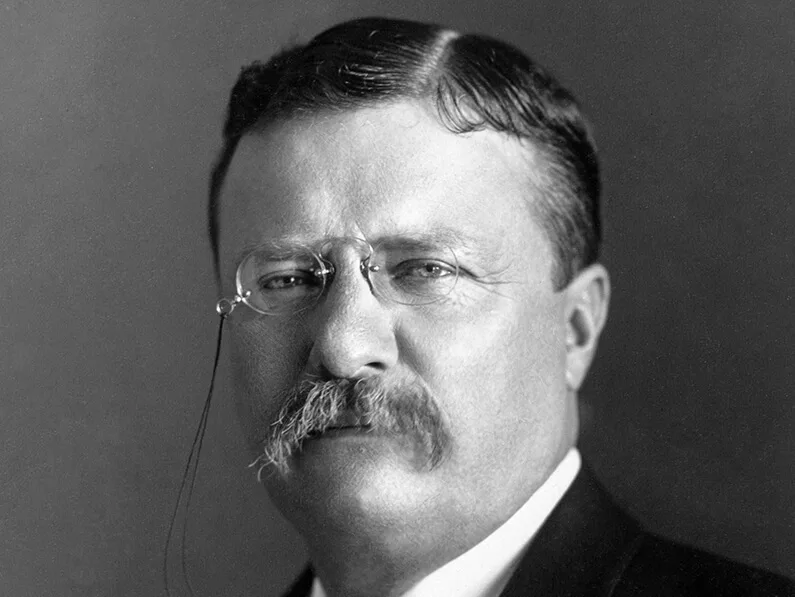
The man who signed those laws is worth pausing on, because typhoid was not an abstraction to him. Theodore Roosevelt was a sickly, asthmatic boy who willed himself into a barrel-chested adult, a naturalist who at seven acquired a dead seal's head from a market and founded, with his cousins, a little Roosevelt Museum of Natural History in the house. He grew into a Rough Rider, a conservationist who set aside vast public lands, a Nobel Peace Prize winner, and a president so stubborn he once finished an hour-long speech after being shot in the chest. But the event that bent his life happened on February 14, 1884. Two days after his wife Alice gave birth to their daughter, Roosevelt was called home from the legislature to a house where both women he loved were dying on separate floors. His mother, Mittie, died of typhoid fever around three in the morning. His wife died that afternoon of a kidney disease the pregnancy had hidden. In his diary that day he drew a heavy X and wrote a single line, that the light had gone out of his life.
Mittie almost certainly caught typhoid the way most people did in Gilded Age New York: from food or water touched by sewage, in a city that did not yet treat either. The disease that widowed and orphaned a future president, and helped turn him into a reformer of cities and food, is the same one this whole hamburger thread has been walking toward.
A Stowaway in the Macrophage
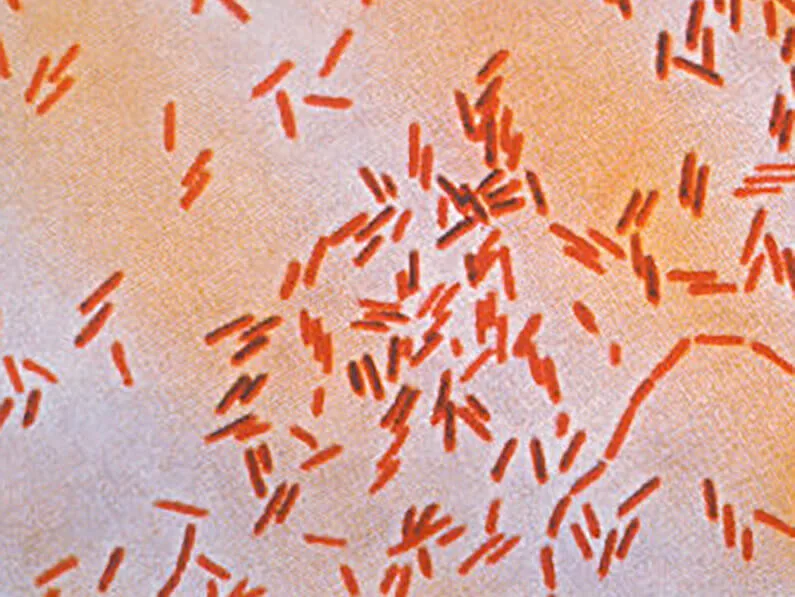
Typhoid fever is caused by Salmonella enterica serotype Typhi, a gram-negative, flagellated rod that lives nowhere in nature except inside human beings. There is no animal reservoir, no environmental hideout; it passes from person to person by the fecal-oral route, when bacteria shed in one person's stool reach another person's food or water. That detail is the hinge of everything that follows. Swallowed in a large enough dose to survive the stomach's acid, the bacteria slip across the gut lining at the Peyer's patches, clusters of immune tissue in the lower small intestine. Then comes the clever, sinister part. They are engulfed by macrophages, the immune cells whose entire job is to eat and destroy invaders, and instead of dying they survive inside, ride those cells through the lymphatic system, and replicate, turning the body's own defense into transport and shelter. They spill into the bloodstream, seed the liver and spleen, and crucially settle in the gallbladder.
The illness that results gives off fever, headache, exhaustion, a scatter of pink rose spots, and, in the worst cases, perforated intestines and bleeding. The name itself comes from the Greek typhos, meaning smoke, for the mental fog and delirium of the severe disease. Worldwide there are still on the order of twenty million cases a year; in the United States only a few hundred, mostly carried home by travelers. It is treatable with antibiotics and preventable with a vaccine. But the gallbladder is the catch. In a small fraction of people, perhaps one in twenty, the bacteria take up permanent residence there, often nestled in biofilms on gallstones, long after the person has recovered and feels completely well. They become a chronic carrier, shedding live typhoid in their stool for years, even decades, while showing no symptoms at all. A human reservoir who feels fine. Which is to say, the disease was waiting for someone exactly like Mary Mallon.
The Most Dangerous Woman in America
Mary Mallon emigrated from Ireland as a teenager and made her living as a cook for wealthy New York families. Between roughly 1900 and 1907, typhoid kept breaking out in the households she worked for, usually within weeks of her arrival. All told she was linked to at least fifty infections and three deaths. What made her case historic is that she was the first healthy carrier ever identified and documented: infected, contagious, and yet never sick a day herself. A sanitary engineer named George Soper traced the outbreaks to her and, in the middle of the prim Victorian era, approached her to ask for stool and urine samples. From her point of view this was outrageous. She felt perfectly healthy, she had done nothing wrong, and a stranger was accusing her of poisoning the people she cooked for. She refused, and she was eventually arrested and tested by force. The samples came back swarming with Salmonella Typhi.
She was quarantined on North Brother Island in the East River, where more than a hundred of her stool samples tested positive, and the newspapers seized on her, branding her Typhoid Mary and calling her the most dangerous woman in America. After about two years she was released on a single condition: never cook for others again. The city helped her find work as a laundress, which paid less, and she was shunned wherever she was recognized. Eventually she changed her name to Mary Brown and went back to the one trade she knew, taking a kitchen job at a hospital, where she touched off another outbreak that sickened twenty-five people and killed two. She was arrested a second time and spent the rest of her life, more than two decades, confined to the island until she died there in 1938. She once wrote that she had been made into a kind of peep show. And here is the part that should sit uncomfortably: during the years she was caged, public health workers identified many other healthy typhoid carriers, and almost none of them were locked away. She was the one with a name the papers could sell.
Two Kinds of Contamination
So the thread from a hamburger to Typhoid Mary is really a study of two responses to the same problem. Invisible contamination terrifies us, and we answer it in two very different registers. When the danger was industrial and faceless, the meat in the grinder, we did something genuinely admirable: we passed laws, built the FDA, and made the food supply safer for everyone, the reform a typhoid widower happened to sign. When the danger wore a human face, an immigrant cook who felt perfectly well and had asked for none of this, we built a spectacle and a prison instead, and we singled out the one carrier we could name while quietly letting the others walk. Mary Mallon was a real hazard; no one should pretend a chronic carrier in a kitchen is harmless. But she was also a person we failed, and the asymptomatic carrier remains the hardest case any outbreak presents, precisely because the threat looks exactly like an innocent person, because it is one. The hosts' plea at the end of the episode is the right one and it is not soft: treat the infected as people, whatever is living inside them, because the alternative is that the next carrier, afraid of becoming the next Typhoid Mary, simply never gets tested at all. There is, it turns out, something about Typhoid Mary, and most of it is about us.
Hosts
Microbiologist, writer and host
Microbiologist and co-host
Sources and Credits
- CreditWritten and performed by Dr. Dustin Edwards and Dr. Faith Cox (opens in a new tab)
- MusicPoppers and Prosecco by Kevin MacLeod (opens in a new tab)incompetech.com via filmmusic.ioCC BY 4.0
- ImageTheodore Roosevelt (opens in a new tab)Library of CongressPublic domain
- ImageSalmonella enterica serotype Typhi (opens in a new tab)CDCPublic domain
- referencePure Food and Drug Act (opens in a new tab)WikipediaPublic outrage over The Jungle led to the Pure Food and Drug Act and Federal Meat Inspection Act of 1906, signed by Theodore Roosevelt; enforcement went to the Bureau of Chemistry, renamed the FDA in 1930.
- referenceHow Upton Sinclair's 'The Jungle' Led to US Food Safety Reforms (opens in a new tab)History.comOn June 30, 1906, Roosevelt signed the first comprehensive federal food-safety laws; the Pure Food and Drug Act created the FDA.
- referenceThe Jungle (Theodore Roosevelt Center) (opens in a new tab)Theodore Roosevelt Center, Dickinson State UniversitySinclair sent his book to Roosevelt; investigators confirmed unsanitary conditions; Sinclair's line that he aimed at the public's heart and hit its stomach.
- referenceTheodore Roosevelt's Mother and Wife Died Within Hours of Each Other on Valentine's Day (opens in a new tab)Biography.comFeb 14, 1884: mother Mittie died of typhoid fever in the early morning; wife Alice died that afternoon of Bright's disease (kidney failure); TR wrote 'The light has gone out of my life.'
- reference'The Light Has Gone Out of My Life': Theodore Roosevelt's 1884 Pocket Diary (opens in a new tab)Library of Congress (Manuscripts blog)Mittie died of typhoid at 3 a.m.; Alice died of Bright's disease at 2 p.m. the same day in the same house, two days after their daughter's birth.
- referenceTheodore Roosevelt and Valentine's Day (opens in a new tab)We're HistoryMittie likely contracted typhoid from food or water contaminated by sewage in a New York City that did not yet treat sewage or drinking water; the tragedy pushed TR toward urban reform.
- referenceChronic and acute infection of the gall bladder by Salmonella Typhi: understanding the carrier state (opens in a new tab)PMC (Nature Reviews Microbiology)S. Typhi crosses the gut at Peyer's patches, is phagocytosed by macrophages and spreads systemically; colonizes the gallbladder as a long-term reservoir; a human-specific disease with ~21 million infections per year.
- referenceTyphoid Fever: Background, Etiology, Pathophysiology (opens in a new tab)MedscapeTyphoidal Salmonella co-opt macrophages for their own reproduction; chronic carriers, while asymptomatic, may shed bacteria in stool for decades and drive much of transmission.
- referenceSalmonella chronic carriage: epidemiology, diagnosis and gallbladder persistence (opens in a new tab)PMCTyphoid Salmonella have no known environmental reservoir, so the chronic asymptomatic carrier is key to its persistence; Typhoid Mary was the subject of one of the first true epidemiological investigations of an infectious disease.
- referenceMary Mallon (1869-1938) and the history of typhoid fever (opens in a new tab)Annals of Gastroenterology (review)Mary Mallon, an Irish-immigrant cook in New York, became the archetypal healthy chronic carrier ('Typhoid Mary'); ~1-5% of typhoid patients become chronic gallbladder carriers, ~90% of whom have gallstones.
Transcript
Listen and subscribe
Related
Antitoxin Togo, Please
What do blue jeans have to do with diphtheria antitoxin and the 1925 Serum Run to Nome? Follow the journey from Levi Strauss and the Gold Rush to the 1925 serum run, where sled dogs raced to deliver life-saving antitoxin. Timeless fashion and infectious diseases might seem like an unlikely pairing, but history has a way of weaving together the unexpected.
Hell on Weils
How does Mardi Gras and Carnival connect to leptospirosis? From New Orleans parades to Brazil’s Carnival, uncover the link between reservoirs, Leptospira bacteria, and the hidden dangers lurking in water and soil.
Rabies Day Out
How does the Google no internet Dinosaur Game connect to Rabies? Haunt over the Raven by Edgar Allen Poe, classic Universal monster movies, psychological thriller and horror by Hitchcock, Kubrick, and Stephen King – including Cujo, and rabies and post exposure vaccine treatment.