Season 1 · Episode 7
A Boy Named Flu
21:00Updated June 26, 2026
What do kindergarten arts and crafts have to do with influenza and the flu? Take a trip down memory lane with grade school activities, remembering Columbus sailed the ocean blue in 1492, the transfer of infectious disease with European colonization of the Americas, the dangers of influenza then and now, and the flu vaccine.
In this episode
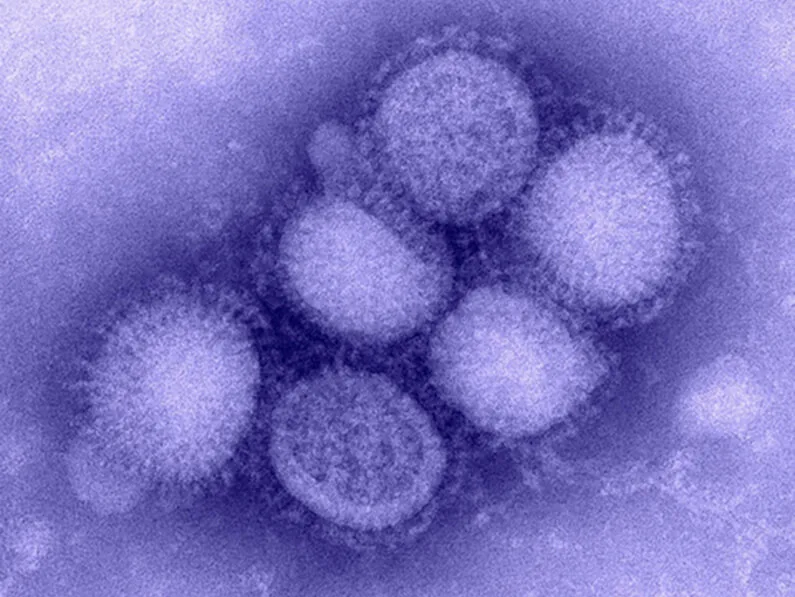
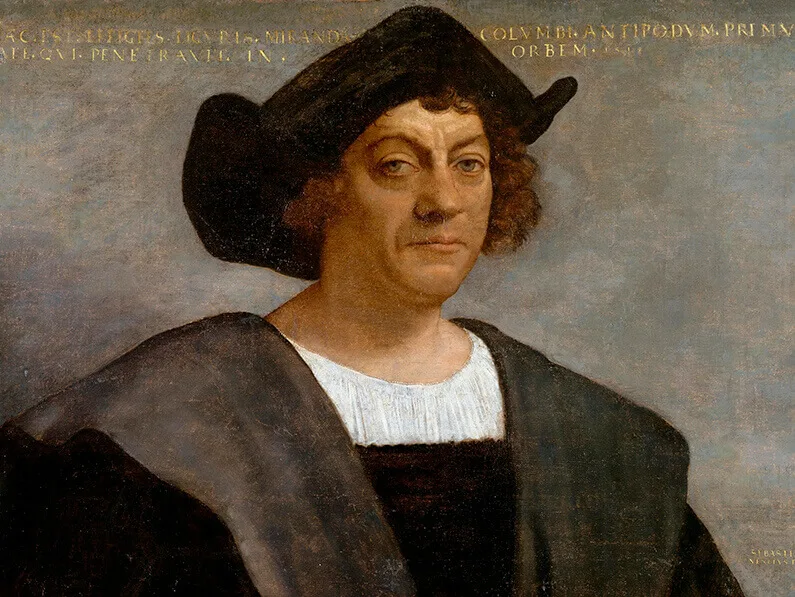
The Flu That Sailed the Ocean Blue
There is a rhyme almost every American can still recite without thinking: in 1492, Columbus sailed the ocean blue. It surfaces around the same time each year, when the construction-paper crafts start coming home from school and the first cold snap arrives, which is also, not coincidentally, when flu season begins. That overlap is the doorway into this episode, because the connection between Columbus and influenza is not a stretch at all. The flu is the disease that is always new. It arrived in the Americas tucked into the same voyages that opened the hemisphere, and more than five centuries later it still comes back every autumn wearing a different name, because reinventing itself is the entire secret of how it survives. This is the story of why a virus we have known about for a hundred years still kills tens of thousands of people a year, and why the only defense against a stranger that changes its face annually is one you have to renew on the same schedule.
What Columbus Carried
Christopher Columbus was an Italian navigator financed by Spain, and the voyages he began in 1492 opened a permanent sea route between Europe and the Americas. What followed for the people already living there was catastrophe, partly by the sword and partly by something nobody on either side understood. The Taino who met his ships had been separated from the Old World's crowd diseases for roughly twelve thousand years, and they carried no immunity to them. When Europeans, their livestock, and their microbes arrived, the result was what historians call a virgin-soil epidemic. Estimates vary and are necessarily rough, but something on the order of eighty to ninety percent of the Indigenous population of the Americas died over the following century and a half, most of them from disease rather than violence.
Smallpox is the name most people attach to that collapse, and it did arrive, devastatingly, a few decades later. But the first recorded epidemic came earlier. During Columbus's second voyage, in 1493, a sudden, highly contagious illness with fever and crushing malaise swept the new settlement of La Isabela on Hispaniola, sickening the Spanish, including Columbus himself, and killing the Taino in large numbers. Because smallpox would not be documented on the island for decades more, and because the fleet had brought pigs aboard, historians who later studied the accounts concluded the likeliest culprit was swine influenza, an animal flu that jumped to people. The earliest American epidemic on record was, in all probability, the flu. To understand why a respiratory bug could do that kind of damage, and why it keeps returning, you have to understand what influenza actually is.
A Virus Built to Change
The flu is not a bad cold. Colds have many causes and are usually mild; influenza is caused only by influenza viruses, comes on abruptly, and brings the body aches that are its real signature. It is an RNA virus and an obligate intracellular parasite, which means it can only reproduce by hijacking your cells and bursting them on the way out. There are four types, A, B, C, and D, the last of which was only identified around 2011 and given its own category in 2016. Type A is the dangerous one. Its natural home is wild aquatic birds, ducks and geese and shorebirds, which carry a huge variety of it; from there it can spill into poultry, pigs, and people, and that is where pandemics come from.
Type A is named by two proteins on its surface, and those names are the H#N# labels you hear on the news. Hemagglutinin, the H, is the key that lets the virus unlock and enter a host cell. Neuraminidase, the N, is the pair of scissors that cuts newly made viruses free so they do not clump on the cell they just destroyed. There are eighteen known H subtypes and eleven N subtypes, and they recombine, especially when two different flu strains infect the same animal, a pig being a notorious mixing vessel, and swap whole gene segments. That reshuffling, called antigenic shift, can produce a virus the human immune system has never seen, which is exactly how the great pandemics arose: the 1918 H1N1, the 1957 H2N2, the 1968 H3N2, the 2009 swine-flu H1N1, with avian strains like H5N1 and H7N9 watched closely for the same potential. Even between those big jumps, the virus is constantly accumulating smaller mutations, a slower process called antigenic drift. The upshot is a pathogen whose defining trait is that it is always slightly new, which is precisely why catching the flu one year buys you almost nothing the next.
How It Travels, and How Much It Costs
Influenza spreads about as easily as a respiratory virus can. It rides aerosolized droplets from coughs and sneezes, passes by direct contact, and lingers on fomites, the doorknobs and keyboards and phones we share, staying viable for up to two days on hard surfaces and considerably longer when it is wrapped in mucus. It favors winter partly because low humidity and weak ultraviolet light let those droplets persist. None of this is a historical footnote. In a typical recent year the United States alone sees on the order of tens of millions of flu illnesses, hundreds of thousands of hospitalizations, and tens of thousands of deaths. The 2018-2019 season was later estimated at roughly twenty-nine million illnesses and about twenty-eight thousand deaths, and that was the milder of two back-to-back seasons. The 2017-2018 season was classified as high severity, killed tens of thousands of Americans, and produced the highest number of confirmed pediatric flu deaths outside a pandemic year. Influenza and pneumonia together routinely rank among the leading causes of death in the country.
Most people who get the flu recover on their own, but there are warning signs that warrant real attention: trouble breathing, chest pain, confusion, a bluish color from lack of oxygen, an inability to keep fluids down, or symptoms that improve and then come roaring back with fever, which often signals a secondary bacterial pneumonia. There are antiviral drugs, but they work best within the first forty-eight hours, a window that is cruelly easy to miss when the disease has flattened you onto the couch. Which is the whole argument for not relying on treatment in the first place.
A New Shot Every Year
If the flu's superpower is constant reinvention, the counter is a defense we are willing to renew just as constantly. That is the annual flu vaccine. Each year its composition is reviewed and updated to match the strains expected to circulate, which is the honest answer to the most common shrug, that someone already got one last year. Last year's shot was aimed at last year's stranger. A few of the other familiar objections are worth retiring as well. The standard flu shot is inactivated, made from killed virus or just viral proteins, so it physically cannot give you the flu; the nasal spray uses a weakened virus engineered to survive only in the cool nose and not the lungs, and cannot give it to you either. There are egg-free formulations for people with egg allergies. The vaccine is recommended during pregnancy, where it protects both the parent and the newborn for its first months of life. And getting it is not really about you alone: the people who die of influenza are disproportionately the very young, the very old, and the immunocompromised who often cannot be vaccinated themselves, so a shot you barely feel is partly a shield you hold over them.
So the thread runs from a kindergarten rhyme to a Caribbean colony to a syringe at the pharmacy, and it holds together because the subject never changed: a virus whose genius is that it is forever arriving somewhere new. It came ashore with Columbus as one more thing the New World had never met, and it still comes back every fall as a boy named Flu, toughened and renamed by each encounter, daring your immune system to recognize it. We cannot make it stop changing. What we can do is keep changing the introduction, once a year, on its schedule. That is not a cure. It is something better suited to this particular enemy: a standing appointment.
Hosts
Microbiologist, writer and host
Microbiologist and co-host
Sources and Credits
- CreditWritten and performed by Dr. Dustin Edwards and Dr. Faith Cox (opens in a new tab)
- MusicOff to Osaka by Kevin MacLeod (opens in a new tab)incompetech.com via Free Music ArchiveCC BY 4.0
- ImageChristopher Columbus (portrait said to be Columbus) (opens in a new tab)Sebastiano del PiomboPublic domain
- ImageInfluenza virus (H1N1) (opens in a new tab)CDCPublic domain
- referenceInflux of disease in the Caribbean (opens in a new tab)WikipediaPigs aboard Columbus's 1493 second voyage spread swine flu, the first recorded influenza epidemic in the Americas, sickening Europeans and devastating the Taino; up to ~90% of some Native populations died within a half-century.
- referenceHow the Columbian Exchange Brought Globalization and Disease (opens in a new tab)History.comOld World diseases met populations isolated for ~12,000 years; Las Casas reported Hispaniola's population fell to about a third between 1494 and 1506; smallpox reached the island by 1519.
- referenceBiological Impacts of European Expansion in the Americas (Guerra, 'The Earliest American Epidemic: The Influenza of 1493') (opens in a new tab)Encyclopedia.comThe 1493 epidemic at La Isabela is now attributed to influenza carried by pigs on Columbus's second expedition; Hispaniola's population collapsed from perhaps a million in 1492 to a few hundred by the mid-1500s.
- referenceTypes of Influenza Viruses (opens in a new tab)U.S. CDCFour types (A, B, C, D); type A subtyped by hemagglutinin (18 H) and neuraminidase (11 N) surface proteins, e.g. A(H1N1), A(H3N2); reassortment lets influenza viruses swap gene segments.
- referenceGenetics of the Influenza Virus (opens in a new tab)Nature Education (Scitable)Only influenza A infects nonhuman hosts; birds are the reservoir for all subtypes; reassortment between animal and human strains produces antigenic shift and potential pandemics.
- referenceInfluenza A Virus (IAV): A Comprehensive Guide (opens in a new tab)Microbe NotesWild aquatic birds are the principal reservoir; pigs act as 'mixing vessels'; at least five pandemics in the last century (1918 H1N1, 1957 H2N2, 1968 H3N2, 2009 H1N1) arose from reassortment.
- referenceEstimated Flu Burden, 2018-2019 Season (opens in a new tab)U.S. CDCCDC estimated ~29 million flu illnesses, ~380,000 hospitalizations, and ~28,000 deaths for 2018-2019; the 2017-2018 season was classified high severity by comparison.
- referenceKey Facts About Seasonal Flu Vaccine (opens in a new tab)U.S. CDCFlu shots are inactivated or recombinant and cannot cause flu; the nasal spray's weakened virus only replicates in the cool nose; an annual vaccine is needed because immunity wanes and because the virus changes, so vaccine composition is updated yearly.
- referenceInfluenza (vaccine facts: inactivated, egg-free, pregnancy) (opens in a new tab)Johns Hopkins Institute for Vaccine SafetyInactivated vaccine cannot cause influenza; egg-free options (recombinant Flublok, cell-based Flucelvax) exist for egg-allergic patients; inactivated vaccine is routinely recommended during pregnancy.
- referenceInfluenza (Flu) Vaccine Safety (opens in a new tab)U.S. CDCInjectable flu vaccines contain no live virus; flu vaccination in pregnancy was not associated with increased infant hospitalization and helps protect newborns in their first months.
Transcript
Listen and subscribe
Related
Antitoxin Togo, Please
What do blue jeans have to do with diphtheria antitoxin and the 1925 Serum Run to Nome? Follow the journey from Levi Strauss and the Gold Rush to the 1925 serum run, where sled dogs raced to deliver life-saving antitoxin. Timeless fashion and infectious diseases might seem like an unlikely pairing, but history has a way of weaving together the unexpected.
Hell on Weils
How does Mardi Gras and Carnival connect to leptospirosis? From New Orleans parades to Brazil’s Carnival, uncover the link between reservoirs, Leptospira bacteria, and the hidden dangers lurking in water and soil.
Rabies Day Out
How does the Google no internet Dinosaur Game connect to Rabies? Haunt over the Raven by Edgar Allen Poe, classic Universal monster movies, psychological thriller and horror by Hitchcock, Kubrick, and Stephen King – including Cujo, and rabies and post exposure vaccine treatment.