Season 1 · Episode 10
Antitoxin Togo, Please
21:17Updated June 26, 2026
What do blue jeans have to do with diphtheria antitoxin and the 1925 Serum Run to Nome? Follow the journey from Levi Strauss and the Gold Rush to the 1925 serum run, where sled dogs raced to deliver life-saving antitoxin. Timeless fashion and infectious diseases might seem like an unlikely pairing, but history has a way of weaving together the unexpected.
In this episode
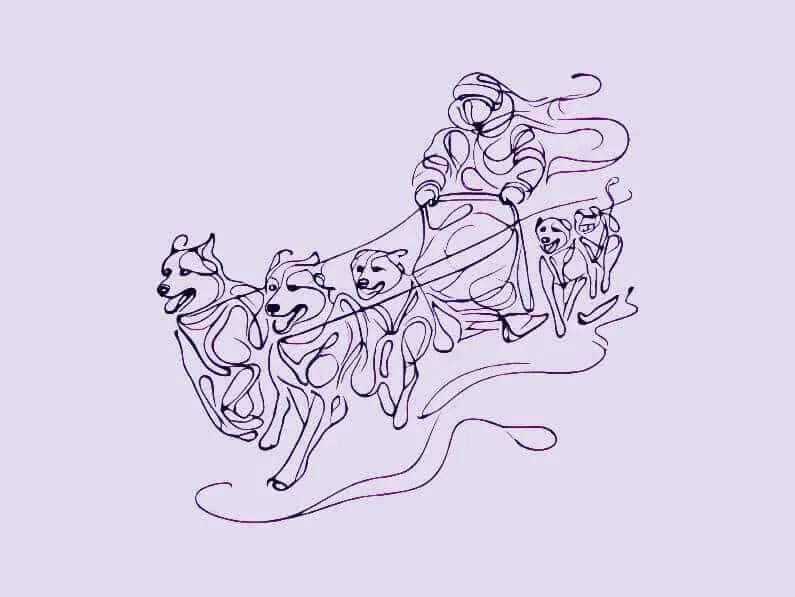
A Game of Timeless and Not
We like to start with a game. Name the things that are timeless, and the answers come fast: red lipstick, a plain white tee, blue jeans. Name the things that are emphatically not timeless, and the list is just as quick: micro bangs, mullets, low-rise jeans, Crocs, that brief and regrettable season of wearing a dress over jeans. Somewhere on that second list, if you are us, you will also find diphtheria.
The joke has a real question folded inside it. How does a pair of blue jeans, about as timeless as an object can be, connect to a bacterial disease that once killed children by the thousands, and to a team of sled dogs running through the dark of an Alaskan winter? Pull on the thread and it runs from a cloth woven in the south of France to a tailor's shop in Nevada, out to a frozen harbor on the edge of the Arctic, and finally down to a single microbe that turns lethal only when it is itself infected. Here is the whole thread, start to finish.
A Pair of Pants Built to Take Abuse
Before there was a brand, there was a fabric, and the fabric carried its birthplace in its name. A sturdy cotton twill woven in Nîmes, in southern France, was sold as serge de Nîmes, and English speakers shortened "de Nîmes" into the word we still use: denim. The other half of the vocabulary comes from Italy. Weavers in Genoa made a similar hard-wearing cloth, dyed it with indigo, and shipped it across Europe as bleu de Gênes, the blue of Genoa, which English mouths flattened into "blue jeans." The cloth and the garment were old and well traveled long before the name most of us attach to them ever showed up.
That name belonged to Levi Strauss, a Bavarian immigrant who arrived in the United States as a poor young man and went to work in his family's dry-goods trade in New York. In 1853, at twenty-four, he opened a West Coast branch of the family business in San Francisco and stocked it with everything a boomtown could want: clothing, bedding, combs, handkerchiefs, even tents.
The invention that made his name famous, though, was not his. In the early 1870s a tailor named Jacob Davis, working in Reno, Nevada, took an order from a laborer's wife who wanted work pants that could survive real punishment. Looking at the rivets and fasteners he used on harnesses and tents, Davis tried hammering copper rivets into the spots where trousers always blow out first, the corners of the pockets and the base of the fly. They held. The riveted pants were far tougher than anything else on the market, and orders piled up faster than one tailor could fill them. What Davis lacked was the money to file a patent and any idea how the process worked, so he wrote to the man who supplied his cloth, Levi Strauss, and proposed they hold the patent together. Strauss agreed. On May 20, 1873, the two men were granted U.S. Patent No. 139,121, for an "Improvement in Fastening Pocket-Openings," and the riveted blue jean was born. Davis moved to San Francisco to run the manufacturing while Strauss ran the business. The patent expired in 1890. More than a century later, one company is still a synonym for blue jeans, and blue jeans are still a synonym for a certain idea of America. To understand why Strauss was in San Francisco to receive that letter at all, you have to follow the gold.
Gold, and the City It Built
Strauss did not sail west for the scenery. He came for the largest sales opportunity in the country. In January 1848, a carpenter named James W. Marshall spotted flakes of gold in the tailrace of a sawmill he was building for John Sutter, near Coloma in the Sierra Nevada foothills. He and Sutter tried to keep it quiet, and failed spectacularly. Word reached the East Coast, the president confirmed it before Congress, and roughly 300,000 people from across the country and around the world set out for a single stretch of California coast. San Francisco grew from a settlement of a few hundred in the mid-1840s to a city of some 36,000 within about six years. Even in that crush it already held around 120 dry-goods stores, and Strauss outlasted most of his competitors for an unglamorous reason: his family's firm back east kept his shelves full when other merchants ran dry.
The earliest gold was almost embarrassingly easy to reach. It lay concentrated in gravel creek beds, so the first prospectors could pluck flakes and nuggets out by hand or swirl them from a pan, and a good day could be worth ten times a laborer's daily wage on the East Coast. By the time the surface gold gave out, miners had pulled more than 750,000 pounds of it from California, worth tens of billions of dollars today.
That sudden weight of people and money landed hardest on the people who were already there. When the rush began, California held roughly 6,500 Californios of Spanish and Mexican descent, a few hundred other foreigners, and about 150,000 Native Americans. Within a few years, an estimated 120,000 of those Native Americans, close to nine in ten, were dead from disease, starvation, and outright killing. The gold that built a state was a catastrophe for the people who had lived on that land first, and it is worth saying so plainly before we move on.
The rush also dragged California to statehood at startling speed. In 1850, only two years after Marshall's discovery and just after the Mexican-American War handed the territory to the United States, California entered the Union as part of the Compromise of 1850, a bundle of five bills meant to hold off the fight over slavery that would later become the Civil War. One admitted California as a free state to balance the slave state of Texas; another fixed the borders of Texas roughly where they sit on the map today. A pair of work pants, it turns out, shares an origin story with the shape of a state line.
Chasing Gold to the Edge of the Map
Gold has a way of moving people, and it kept moving them north. About forty years after California, in 1896, a strike on a tributary of the Klondike River near the Alaska-Canada border set off the last great gold rush of the century. The discovery is usually credited to a party that included the American prospector George Carmack and a Tagish man named Keish, better known as Skookum Jim; the claim was filed in Carmack's name because the recorders of the day were unlikely to honor a Native one. Word reached Seattle and San Francisco the next summer, and something like 100,000 people set out for the Yukon, among them a young Jack London, who mined more stories than gold and turned the experience into The Call of the Wild.
The Klondike was far less forgiving than California. The two main routes in, the Chilkoot and White Pass trails, were steep enough and deadly enough that the Canadian authorities refused to let anyone cross without a year of provisions, close to a ton of goods that each stampeder hauled up the passes load by load, trip after trip. Photographs of the Chilkoot show an unbroken line of climbers strung up the slope like ants on a staircase. Of the roughly 100,000 who started, only about 30,000 reached the goldfields at all, and just a few thousand ever found gold worth the trip.
The Klondike faded almost as fast as it flared, partly because easier gold turned up elsewhere, including the beaches of Nome, on Alaska's western coast, where it could be scooped from the sand without staking a claim. Nome swelled toward 20,000 people in the first decade of the 1900s, a tent city running for miles along the waterline, and it collected at least one famous resident in Wyatt Earp, late of the gunfight at the O.K. Corral, who ran a two-story saloon on Front Street and reportedly left town with a small fortune. (One of us, through no fault of his own, has seen the film Tombstone enough times to quote it on command; "I'll be your huckleberry" is lodged in there permanently.) The boom collapsed the way booms do. By 1910 the census counted about 2,600 people, and Nome survives today as a town of fewer than four thousand, which is remarkable when you consider where it sits: just below the Arctic Circle, with long, dark, brutally cold winters and a harbor that freezes solid for much of the year. That frozen harbor is where the story stops being an adventure and turns into an emergency.
A Telegram from a Frozen Town
By the winter of 1925, the ice had sealed Nome off from the sea, as it did every year from about November to July. The town had one doctor, Curtis Welch, and four nurses. After the last ship of the season sailed in December, Welch began seeing small children with sore throats and what looked like ordinary tonsillitis. Several of them died. By January he saw the thing he must have been dreading: a grayish membrane spreading across the back of a child's throat, the classic sign of diphtheria.
His problem was almost unspeakable. The diphtheria antitoxin in his office had expired, and the fresh supply he had ordered months earlier never arrived before the port closed. It is worth being precise about what that antitoxin was, because it was not a vaccine. A vaccine trains your own immune system to defend you before you are ever exposed. Antitoxin is a treatment given after infection: antibodies raised by injecting a horse with the toxin, then harvested from the horse's blood and given to a sick person to neutralize the poison already loose in the body. Nome needed that treatment badly and had almost none of it.
The town understood exactly what it was facing. Only six years earlier, the 1918 influenza pandemic had swept the Seward Peninsula with a savagery one historian compared to the Black Death; in the hardest-hit Native villages, somewhere between half and nine in ten residents died. With that memory fresh, Welch and the town leaders feared diphtheria could approach near-total mortality among the unprotected, and they imposed a quarantine. Then Welch sent a telegram out across the territory, in the clipped grammar of the wire, warning that an epidemic of diphtheria was almost inevitable, that he urgently needed a million units of antitoxin, and that the mail, carried by dog team, was the only transportation left.
Getting that antitoxin to Nome was the problem that became legend. There were three airplanes in all of Alaska in 1925, none built for winter, all of them dismantled, with no experienced pilots in the territory to fly them. That left the dogs. The plan was to run the serum 674 miles across Alaska in the dead of winter by relay, picking it up where the railroad ended at Nenana and handing it from team to team toward Nome. Welch calculated the antitoxin would survive only about six days in such cold, which meant the relay had to cover, in roughly five and a half days, a route that normally took a month and had been run, once, in nine. A smaller cache of 300,000 units turned up in an Anchorage hospital, not enough to stop an epidemic but enough to treat the first patients and slow it, and it was packed into a cylinder and rushed to the railhead while more than a million more units started up the coast by ship.
The Great Race of Mercy
On January 27, 1925, the first musher set out from Nenana into a region suffering twenty-year lows, with temperatures between roughly fifty and sixty-two degrees below zero, blizzard whiteouts, hurricane-force winds, and about five hours of dim daylight under the polar dark. Within hours of that first leg, parts of the lead driver's face had blackened with frostbite, and at the first roadhouse he had to leave behind dogs that were already failing. Back in Nome, the case count kept climbing, and another child died.
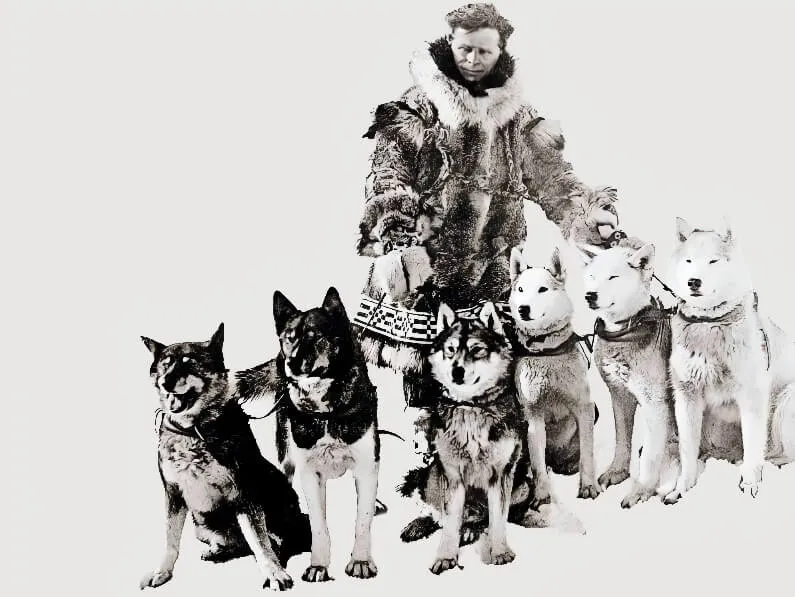
The longest and most dangerous stretch fell to Leonhard Seppala and his lead dog, Togo. Seppala had a personal stake, a young daughter at risk in town, but he was chosen for a plainer reason: at forty-seven, with a twelve-year-old Siberian husky in the lead, he was simply the best driver in the region. He ran farther than anyone else, about 261 miles in all once you count the trip out to meet the serum and the run back, and to save a full day he took a route no one ran on a good afternoon, straight across the frozen surface of Norton Sound. Sea ice there flexes and cracks in the wind, and a team that lands its claws wrong can drop through into water that kills in minutes. Seppala crossed it in a gale, with Togo reading the ice in the dark and choosing the line. By one account the stretch he had just traversed broke apart and drifted out to sea only a few hours behind him.
On February 2, the final musher, Gunnar Kaasen, drove his lead dog Balto down Front Street with every glass ampule of serum intact. The relay had taken about 127 and a half hours, just over five days, run by some twenty teams and more than 150 dogs, several of which died on the trail. The antitoxin worked, and the epidemic broke. The recorded death toll was small, five to seven, but that figure reflects mostly the town's documented cases. Deaths among Alaska Native families in the surrounding district went largely uncounted, then as so often, and were almost certainly far higher, with estimates above a hundred.
History, for a while, remembered the wrong dog. Balto, who ran the last leg into town and stood for the photographers, got the statue in Central Park and, decades later, an animated movie. Togo, who ran the longest and most lethal distance, was overlooked for years before the record was set straight; he has his own statue now, and a 2019 film at last told his side. Both dogs earned their place, and the run itself, the Great Race of Mercy, is retraced every year by the Iditarod sled dog race along much of the same route.
The Bacterium That Needs a Virus to Be Deadly
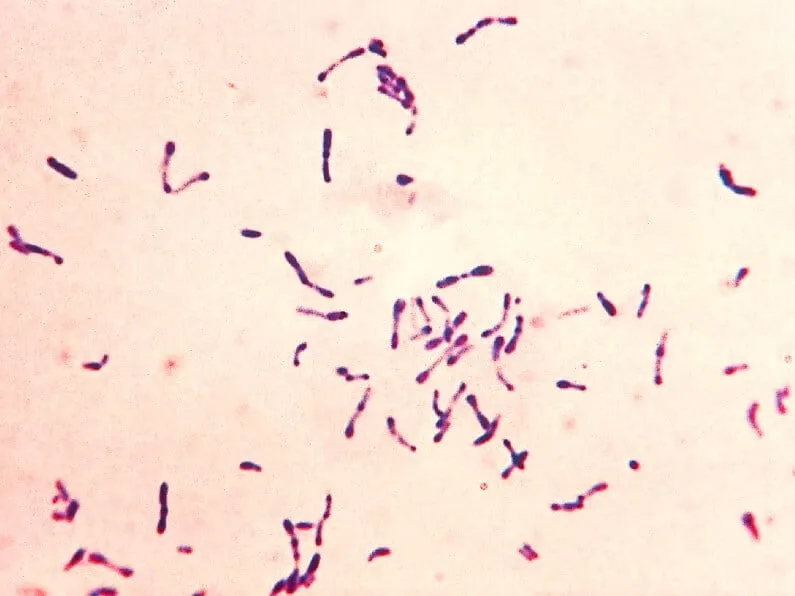
The agent behind all of this is a bacterium called Corynebacterium diphtheriae, first seen by Edwin Klebs in 1883 and grown in pure culture a year later by Friedrich Löffler, who proved it caused the disease; for that reason it is still sometimes called the Klebs-Löffler bacillus. It is a gram-positive rod, meaning it wraps itself in a thick outer wall, and it is pleomorphic, able to shift its shape with its surroundings. Several subspecies exist, any of which can cause the disease. Here is the strange part, and the part that makes this whole detour worthwhile: the bacterium is not inherently dangerous. Whether a given strain can kill you depends on whether it is itself carrying a particular virus.
The poison that does the damage, diphtheria toxin, is not written into the bacterium's own core genome. It is delivered by a bacteriophage, a virus that infects bacteria, which can stitch itself into the bacterial chromosome and sit there quietly as what microbiologists call a prophage. The gene for the toxin rides along inside that viral DNA. A C. diphtheriae cell without the phage is essentially harmless; the same cell, once infected by the right phage, becomes a factory for one of the most efficient poisons known. The pathogen, in other words, is only a pathogen once it has been infected itself.
The toxin kills by sabotage, and it does so with almost absurd efficiency. It slips into a human cell and disables a single protein, eukaryotic elongation factor 2, that the cell relies on to build every new protein it makes. A cell that cannot make protein cannot live, and a single molecule of toxin is enough to shut one down. In the throat, where the bacteria usually settle, the wreckage becomes visible. Dead cells, incoming immune cells, fibrin, and bacterial debris congeal into a tough sheet, the pseudomembrane, that creeps across the back of the throat and can darken to green or black as the tissue beneath it dies. The disease takes its very name from this membrane: diphtheria comes from the Greek for leather. Left to grow, alongside the swollen lymph nodes that give advanced cases their so-called bull neck, the membrane can close the airway outright. And if the toxin escapes into the bloodstream it travels, inflaming the heart muscle until the rhythm falters, attacking nerves until muscles give way, and injuring the liver and kidneys. Diphtheria can suffocate you or stop your heart, and for most of human history a doctor at the bedside could do little but watch.
Why Diphtheria Is Not Timeless
We do not hold our breath over a child's sore throat anymore, and the reason is the one thing the 1925 serum could never provide: a vaccine. Protection against diphtheria now travels bundled with tetanus and whooping cough, in the DTaP and Tdap shots calibrated to age, and it reached the United States in the 1920s. The effect was close to total. A disease that once arrived in deadly waves now turns up so rarely that the country records only a handful of respiratory cases across an entire decade. The horse-derived antitoxin still exists for those rare cases, though it is no longer a licensed commercial product; it is released by the Centers for Disease Control as an investigational drug when a case is confirmed or strongly suspected, a direct descendant of the serum that crossed Norton Sound behind a team of dogs.
Which brings us back to the game we started with. A tailor's copper rivets, a frozen telegram, a horse's antibodies, a virus hiding inside a bacterium: none of them look related, and all of them meet in a single Alaskan winter. Blue jeans really are timeless. Diphtheria, thanks to a vaccine and one extraordinary run of dogs, mostly is not. That gap, between the thing that lasts and the thing we managed to leave behind, is exactly the kind of connection this show goes looking for.
Hosts
Microbiologist, writer and host
Microbiologist and co-host
Sources and Credits
- CreditWritten and performed by Dr. Dustin Edwards and Dr. Faith Cox (opens in a new tab)
- MusicIn Your Arms by Kevin MacLeod (opens in a new tab)CC BY 4.0
- ImageCover illustration of the 1925 serum runGermomics
- ImageCorynebacterium diphtheriae Gram stainCDCPublic domain
- ImageLeonhard Seppala with TogoCarrie McLain MuseumCC0
- referenceThe History of Denim (opens in a new tab)Levi Strauss & Co.Strauss arrived in San Francisco 1853 at age 24; Davis-Strauss patent No. 139,121, May 20, 1873.
- referenceForever in Blue Jeans and in Court (opens in a new tab)U.S. National Archives (Pieces of History)Patent 139,121, improvement in fastening pocket openings, May 20, 1873.
- referenceThe history of jeans: from the origin of denim to indigo (opens in a new tab)Candiani Denimserge de Nimes to denim; bleu de Genes (blue of Genoa) to blue jeans.
- referenceThe California Gold Rush (opens in a new tab)PBS American Experience6,500 Californios, 700 foreigners, 150,000 Native Americans; 120,000 Native Americans died of disease, starvation, homicide.
- referenceGold Rush: California, Date and Sutters Mill (opens in a new tab)HISTORYMarshall at Sutters Mill, Jan 1848; more than 750,000 pounds of gold extracted.
- referenceCalifornia Gold Rush (opens in a new tab)Encyclopaedia BritannicaAbout 300,000 migrants; statehood hastened in 1850.
- referenceKlondike Gold Rush (opens in a new tab)HISTORY1896 discovery (Carmack, Skookum Jim/Keish); ~100,000 set out, ~30,000 reached Dawson; one-ton supply rule; Chilkoot/White Pass; Jack London.
- referenceThe Stampede North: The Alaska Gold Rushes, 1897-1904 (opens in a new tab)U.S. National Park ServiceNome from ~250 to over 20,000 by 1900; fell to 2,600 by 1910.
- referenceNome, Alaska (opens in a new tab)WikipediaWyatt Earps Dexter Saloon (1899); 1900 census 12,488, 1910 census 2,600; 2020 population 3,699; on the Seward Peninsula below the Arctic Circle.
- reference1925 serum run to Nome (opens in a new tab)Wikipedia20 mushers, ~150 dogs, 674 miles, 127.5 hours; Togos team 261 mi (longest/most dangerous), Baltos team 55 mi; Anchorage 300,000 units; Norton Sound shortcut.
- referenceThe Sled Dog Relay That Inspired the Iditarod (opens in a new tab)HISTORYWelchs diagnosis and telegram; Gov. Scott C. Bone organized; -60F; Wild Bill Shannon frostbite; Norton Sound crossed hours before the ice broke.
- reference100 Years After the Great Serum Run, Baltos Legacy Endures (opens in a new tab)Cleveland Museum of Natural HistoryNorton Sound crossed ~3 hours before it broke; arrival in Nome Feb 2, 1925; ~5.5 days.
- referenceThe 1919-21 influenza pandemic (with Alaska/Seward Peninsula data) (opens in a new tab)NIH / PMCHalf the Indigenous Seward Peninsula villages had 1918 flu mortality of 47-90%, vs ~0.47% for non-Indigenous populations.
- referenceCorynebacterium diphtheriae (opens in a new tab)WikipediaKlebs-Loffler bacillus, 1884; gram-positive; tox gene carried by a lysogenic corynephage (prophage); toxin inactivates EF-2; pseudomembrane of fibrin, bacterial and inflammatory cells.
- referenceCorynebacterium Diphtheriae (Medical Microbiology, 4th ed.) (opens in a new tab)NCBI BookshelfKlebs 1883 / Loffler 1884; toxin damages internal organs via a soluble toxin; antitoxin neutralizes circulating toxin.
- referencePinkbook: Diphtheria (opens in a new tab)CDCHorse-derived antitoxin used since the 1890s, available only from CDC under an Investigational New Drug protocol; neutralizes circulating but not tissue-fixed toxin; DTaP/Tdap/Td vaccines.
Transcript
Listen and subscribe
Related
Hell on Weils
How does Mardi Gras and Carnival connect to leptospirosis? From New Orleans parades to Brazil’s Carnival, uncover the link between reservoirs, Leptospira bacteria, and the hidden dangers lurking in water and soil.
Rabies Day Out
How does the Google no internet Dinosaur Game connect to Rabies? Haunt over the Raven by Edgar Allen Poe, classic Universal monster movies, psychological thriller and horror by Hitchcock, Kubrick, and Stephen King – including Cujo, and rabies and post exposure vaccine treatment.
A Boy Named Flu
What do kindergarten arts and crafts have to do with influenza and the flu? Take a trip down memory lane with grade school activities, remembering Columbus sailed the ocean blue in 1492, the transfer of infectious disease with European colonization of the Americas, the dangers of influenza then and now, and the flu vaccine.