Season 1 · Episode 8
Rabies Day Out
25:34Updated June 26, 2026
How does the Google no internet Dinosaur Game connect to Rabies? Haunt over the Raven by Edgar Allen Poe, classic Universal monster movies, psychological thriller and horror by Hitchcock, Kubrick, and Stephen King – including Cujo, and rabies and post exposure vaccine treatment.
In this episode
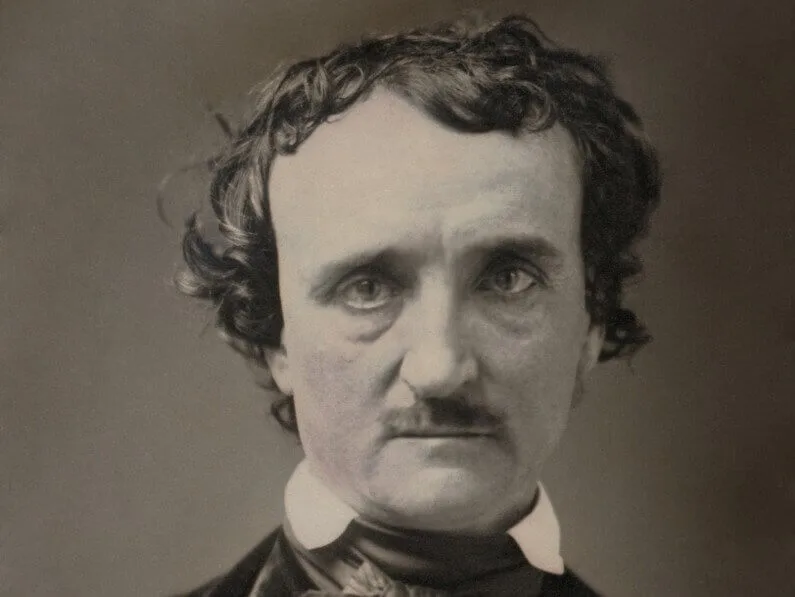
The Tapping at the Chamber Door
A storm knocks out the power, the internet dies, and you find yourself playing the little dinosaur game that appears when a browser has nothing to connect to. It is nearly Halloween. And somewhere in that very ordinary evening is the doorway to one of the oldest and most terrifying diseases on Earth, because the road from a no-signal dinosaur to rabies runs straight through the literature of fear. Once upon a midnight dreary, as the most famous opening in American gothic has it, while the narrator nods nearly napping, something comes tapping at the chamber door. Edgar Allan Poe wrote that, and Poe died young and strangely, found delirious in borrowed clothes on a Baltimore street in 1849, and among the many theories about what killed him is rabies. That is fitting, because this is the Halloween episode, and its real subject is the disease hiding underneath the monsters. Rabies is the original monster. It is the thing our werewolves and our vampires and our rabid movie dogs are dim memories of, and it is, almost uniquely among horrors, the one we eventually learned how to beat.
The Monster Behind the Monsters
Trace the family tree of scary stories and Poe sits near the root. He gave us the modern horror tale and, in the same stroke, invented detective fiction. The gothic writers, Poe and Mary Shelley and Bram Stoker, fed directly into the great Universal monster movies of the 1920s through the early 1940s, a run of films that gave Depression-era audiences a cheap hour of escape and gave us the silhouettes we still put on porches: Dracula, Frankenstein's creature, the Mummy, and, most to the point, the Wolf Man. The lineage continues through Hitchcock and Kubrick and lands on Stephen King, the most adapted horror writer alive, whose early novel Cujo turns a beloved family Saint Bernard into a slavering killer that traps a mother and child in a broiling car. That dog is not possessed or supernatural. The dog has rabies.
And once you notice that, you start seeing it everywhere in the canon. Strip the makeup off the oldest monsters and the same clinical picture keeps surfacing: a familiar creature, a dog or a wolf or a person, that loses its mind, fears nothing, recoils from water, and passes its condition to the next victim through a bite. The werewolf transformed by a bite under the moon, the vampire whose bite recruits new vampires, the loyal animal turned murderous, are all, in a sense, folklore wearing the symptoms of one real virus. Rabies is the disease that turns the bitten into biters, and that is the engine of nearly every monster we tell stories about. The horror writers were not inventing from nothing. They were remembering.
Madness in Latin
The word rabies is Latin for madness, which is about as accurate as a disease name gets. It takes two broad forms, and the one we picture is furious rabies, with its hallmark cluster of agitation, erratic and aggressive behavior, drenching salivation, and the eerie symptom that gave the disease its old name of hydrophobia: a fear of water, caused by violent throat spasms so painful that the victim cannot swallow and may panic at the mere sight of liquid. Some patients react the same way to a puff of air. The animals show a strange tell, looking drunken and slow one moment and striking with shocking speed the next.
It is not a historical curiosity. The World Health Organization estimates that rabies still kills on the order of fifty-nine thousand people a year, the overwhelming majority in Africa and Asia, and roughly four in ten of the dead are children. Around the world, dogs are responsible for some ninety-nine percent of human cases; in the United States, where dog rabies is controlled, the usual sources are raccoons, skunks, foxes, and bats. Small animals like rats and mice essentially never pass it to people, in part because they tend not to survive the attack that would infect them in the first place. And here is the fact that makes rabies the most frightening entry in this whole series: once symptoms appear, it is virtually one hundred percent fatal. In all of recorded history only about fifteen people are known to have survived symptomatic rabies. There is no monster in any movie with a kill rate like that.
The Slow Crawl to the Brain
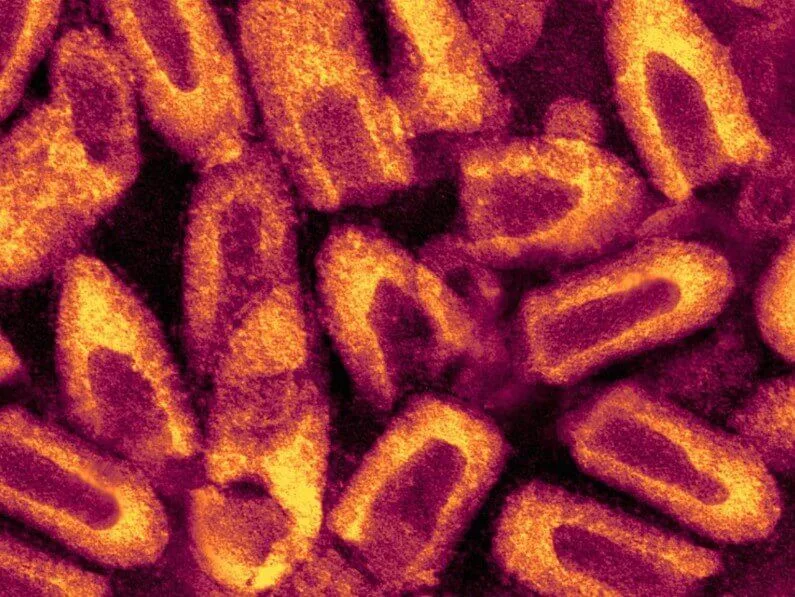
Under a microscope the virus even looks the part, shaped like a blunt bullet. It belongs to the genus Lyssavirus, and its strategy inside the body is patient and grimly elegant. After a bite, the virus enters muscle and latches onto the receptors that nerves use to trigger muscle movement, then slips into the nervous system and begins traveling up the long fibers of the nerve cells toward the spinal cord and brain. It does this by hijacking the cell's own internal transport machinery, and it does it slowly, creeping along at anywhere from a fraction of an inch to a little over a foot per day. When it finally reaches the brain and replicates there, you get the madness. Then, in its final masterstroke, the virus travels back outward to the salivary glands, loading the mouth with infectious particles so that the host's next bite delivers the disease to a new victim. The animal is not just sick; it has been reprogrammed into a delivery system.
That slow crawl up the nerves is the cruelty of rabies, but it is also the one crack in its armor. Because the virus can take weeks, sometimes longer, to travel from a bite on the leg to the brain, there is a window. A race. If you can get the body's defenses ready before the virus arrives at the CNS, you win. Almost everything humane in this story depends on that single gap of time.
The One Monster We Beat
People have dreaded rabies for as long as there are records. There is a Mesopotamian legal code from around 2300 BC fining the owner of a dog that bit someone to death, and through the Middle Ages desperate sufferers were branded with a red-hot iron called St. Hubert's Key in a useless attempt to burn the disease out of a wound. Nothing worked, and for almost all of human history a bite from a rabid animal was a death sentence. Then, in 1885, Louis Pasteur changed it. Working with attenuated virus he had aged by drying out the spinal cords of infected rabbits, and famously not a physician himself, Pasteur treated a nine-year-old boy named Joseph Meister who had been bitten more than a dozen times by a rabid dog. Over about ten days the boy received a series of increasingly potent injections, and he lived. It was the birth of the Pasteur Institute and of an idea that still saves lives. Meister survived into adulthood and worked at the Institute for decades before his death in 1940.
What Pasteur discovered is that you can vaccinate someone after they have already been exposed, a strategy called post-exposure prophylaxis, and it works precisely because the virus moves so slowly. The modern version pairs an immediate dose of antibodies, which buy short-term protection, with a series of vaccine shots that train the body to make its own, and given promptly it is close to one hundred percent effective. The catch, which cannot be stressed enough, is that it has to happen before symptoms begin; once the virus reaches the brain, the window has closed. There are exceptions so rare they prove the rule, like the case of Jeanna Giese, a teenager who in 2004 became the first known unvaccinated person to survive symptomatic rabies after doctors placed her in an induced coma in a last-ditch experiment, an approach that has rarely worked since. Meanwhile, the most effective prevention happens before anyone is bitten at all: vaccinating the animals, including wild ones, sometimes by air-dropping millions of vaccine-laced baits over the woods.
So that is the thread, from a midnight dinosaur game to a bullet-shaped virus by way of every monster you have ever been afraid of. Rabies is the dread that taught us to fear the bite, the madness behind the werewolf and the curse behind the vampire, and it is still out there killing tens of thousands of people a year, most of them children, most of them poor. But unlike the monsters it inspired, rabies has a weakness, and we found it. Every other creature in the Halloween canon ends its story the same way every single time. Rabies is the one where the ending is not fixed, where a person bitten in the dark can get to a clinic and walk back out into the light. It took us four thousand years and a man drying rabbit spines in a Paris lab, but the original monster turned out to be the one we could outrun, half an inch of nerve at a time.
Hosts
Microbiologist, writer and host
Microbiologist and co-host
Sources and Credits
- CreditWritten and performed by Dr. Dustin Edwards and Dr. Faith Cox (opens in a new tab)
- MusicGraveyard Shift, Day of Chaos, and Distant Tension by Kevin MacLeod (opens in a new tab)incompetech.com via filmmusic.ioCC BY 4.0
- MusicToccata et Fugue by Johann Sebastian Bach (opens in a new tab)Public domain
- MusicAlso Sprach Zarathustra by Richard Strauss (opens in a new tab)CC BY 3.0
- MusicThunder by Mike Koenig (opens in a new tab)SoundBibleCC BY 3.0
- MusicGodzilla roar (opens in a new tab)SoundBiblePublic domain
- ImageEdgar Allan Poe (circa 1849) (opens in a new tab)Public domain
- ImageRabies virus (opens in a new tab)Frederick MurphyUniversity of Texas Medical BranchPublic domain
- referenceDeath of Edgar Allan Poe (opens in a new tab)WikipediaPoe was found delirious in Baltimore on Oct 3 and died Oct 7, 1849, at age 40; proposed causes include cooping, alcohol, rabies, and others; a 1996 Maryland Medical Journal analysis by cardiologist R. Michael Benitez argued for rabies.
- referenceThe (Still) Mysterious Death of Edgar Allan Poe (opens in a new tab)Smithsonian MagazineBenitez's 1996 rabies diagnosis rested on delirium and apparent difficulty with water; caveats include that Poe was reported drinking water and that no bite was recorded.
- referenceEdgar Allan Poe (the Poe Toaster) (opens in a new tab)WikipediaFrom 1949 to 2009 an unknown 'Poe Toaster' left a bottle of cognac and three roses at Poe's grave each January 19; Poe pioneered the detective story and the American gothic tale.
- referenceLyssaviruses and the Fatal Encephalitic Disease Rabies (opens in a new tab)PMC (Frontiers in Immunology)After a bite the virus travels up nerves to the brainstem and brain, where symptoms appear, then spreads to the salivary glands for transmission; dog strains classically cause hydrophobia and aerophobia.
- referenceRabies threatens as a preventable viral disease (pathogenesis) (opens in a new tab)PMCRabies virus undergoes retrograde axonal transport from the bite up motor and sensory neurons to the spinal cord and brain, then centrifugal transport out to the salivary glands; an enveloped negative-sense RNA virus of genus Lyssavirus, family Rhabdoviridae.
- referenceRabies (Fact Sheet) (opens in a new tab)World Health OrganizationTens of thousands of deaths annually (commonly ~59,000), about 40% in children under 15; dogs cause 99% of human cases; once clinical symptoms appear rabies is 100% fatal, but deaths are preventable with prompt post-exposure prophylaxis.
- referenceBiting Back (Pasteur, Meister, and post-exposure prophylaxis) (opens in a new tab)Science History InstituteIn 1885 Pasteur treated 9-year-old Joseph Meister, bitten 14 times by a rabid dog, who survived; modern post-bite treatment pairs rabies immune globulin with vaccine and exploits the virus's long incubation, with a success rate near 100%.
- referenceVaccine profiles: rabies (Pasteur, Meister, and Jeanna Giese) (opens in a new tab)GaviPasteur passaged and then desiccated infected rabbit spinal cords to weaken the virus; in 2004 15-year-old Jeanna Giese of Milwaukee was hailed as the first survivor of symptomatic rabies after a medically induced coma; vaccinating 70% of dogs is the most effective prevention.
Transcript
Listen and subscribe
Related
Antitoxin Togo, Please
What do blue jeans have to do with diphtheria antitoxin and the 1925 Serum Run to Nome? Follow the journey from Levi Strauss and the Gold Rush to the 1925 serum run, where sled dogs raced to deliver life-saving antitoxin. Timeless fashion and infectious diseases might seem like an unlikely pairing, but history has a way of weaving together the unexpected.
Hell on Weils
How does Mardi Gras and Carnival connect to leptospirosis? From New Orleans parades to Brazil’s Carnival, uncover the link between reservoirs, Leptospira bacteria, and the hidden dangers lurking in water and soil.
A Boy Named Flu
What do kindergarten arts and crafts have to do with influenza and the flu? Take a trip down memory lane with grade school activities, remembering Columbus sailed the ocean blue in 1492, the transfer of infectious disease with European colonization of the Americas, the dangers of influenza then and now, and the flu vaccine.