Season 1 · Episode 2
On the Right Taq
20:12Updated June 26, 2026
How does honky tonk and rockabilly singer Johnny Horton connect to the Human Genome Project? Join us as we navigate the sinking of the battleship Bismark, Nazi submarines, Alan Turing and the Enigma machine, LSD, the heat-loving bacteria Thermus aquaticus, and Nobel laureate Kary Mullis.
In this episode

A Song You've Never Heard
The fight this time was over a dead country singer. One of us holds that you cannot call yourself culturally literate without knowing Johnny Horton, the 1950s balladeer behind "North to Alaska" and "The Battle of New Orleans." The other had never heard the name and guessed it might be a knockoff of Tim Hortons, the donut chain. We did not resolve this one either. But one of Horton's hits was a galloping little number called "Sink the Bismarck," and that song is the thread we are going to pull. Follow it far enough and it runs from a doomed battleship through a captured code machine, a CIA drug program, and a chemist's hallucination, all the way to a bacterium living in a Yellowstone hot spring, and to what may be the single most important tool in modern biology. Nobody along the way was trying to get there. That is the whole point.
Sink the Bismarck
The Bismarck and her sister ship Tirpitz were the largest battleships Germany ever built, roughly 800 feet of armor and modern guns, fast and very nearly unsinkable. Bismarck was commissioned in August 1940, and in May 1941 she steamed out on her first and only operation, code-named Rheinubung, alongside the heavy cruiser Prinz Eugen: the plan was to break into the Atlantic and strangle the convoys keeping Britain fed and armed. She was spotted almost at once. A neutral Swedish cruiser, the Gotland, saw the German ships slip through the Baltic and reported it, and the word made its way to the British naval attache in Stockholm and on to the Admiralty.
On May 24, in the Denmark Strait between Greenland and Iceland, Bismarck met the pride of the Royal Navy, the battlecruiser HMS Hood. Less than ten minutes after the shooting started, a shell found Hood's magazines; she exploded and sank in about three minutes, and all but three of her roughly 1,400 men died. Enraged, Churchill gave the order that became the song: sink the Bismarck. Dozens of Royal Navy ships gave chase as the damaged German battleship ran for occupied France. What finally caught her was almost comically obsolete, a flight of Fairey Swordfish biplane torpedo bombers from the carrier Ark Royal; one torpedo jammed her rudder and left her able only to steer in a slow circle. On the morning of May 27 the battleships Rodney and King George V and their cruisers closed in and pounded her while her own crew set scuttling charges. Of more than 2,200 men aboard, only about 110 were pulled from the sea. The wreck was not found until 1989, by Robert Ballard, nearly three miles down. And the Bismarck was only one ship in a far larger fight, the Battle of the Atlantic, the longest continuous campaign of the war, which before it ended would cost the Allies some 72,000 sailors and merchant seamen, 3,500 merchant ships, and 175 warships, and cost Germany about 30,000 men and 783 submarines.
The Rotors in the Sea
One of those lost submarines mattered out of all proportion to its size. On February 12, 1940, the Royal Navy ship Gleaner crippled the U-33 with depth charges and forced its crew to abandon ship. The submarine was carrying rotor wheels for an Enigma machine, the encryption device Germany used to scramble its military orders. The crew were supposed to scatter the rotors into the sea; some did not, and the British fished them out. It was exactly the piece the codebreakers had been missing.
Those codebreakers worked at Bletchley Park, the country house north of London that held Britain's Government Code and Cypher School. They did not start from scratch. Poland's Cipher Bureau, and above all the mathematician Marian Rejewski, had been reading Enigma through the 1930s and had even built an electromechanical aid they called the bomba; weeks before the war, the Poles handed their methods and a working Enigma replica to astonished British and French officers. At Bletchley, Alan Turing took that head start and ran with it. He led Hut 8, the section attacking the German navy's Enigma, and with Gordon Welchman he improved the Polish machine into the British Bombe, which could grind through millions of possible settings far faster than any person. The intelligence all of this produced had its own code name: ULTRA. Reading the U-boats' own messages let the Allies route their convoys around the waiting wolf packs, and it helped turn the Battle of the Atlantic. A handful of rotors off a sinking submarine had helped win an ocean.
The Word Resurfaces
After the war, the word ultra did not retire. It surfaced again in the 1950s as the tail end of a CIA cryptonym, MKULTRA. The link is mostly in the name, but the program that name labeled was real and notorious: a sprawling effort to find drugs and techniques for interrogation, brainwashing, and mind control. Its researchers dosed people with powerful drugs, very often without their knowledge or consent, including prisoners, hospital patients, drug users, and the agency's own employees. The drug they kept coming back to was LSD. The program's most haunting casualty was Frank Olson, an Army biochemist who was secretly given LSD at a 1953 gathering, spiraled into paranoia and depression over the following days, and fell to his death from a thirteenth-floor hotel window; the episode has since been told and retold, including in a documentary film. The CIA eventually decided the drug was too unpredictable to weaponize and gave up on it. But by then LSD was loose in the world.
Bicycle Day
LSD, short for lysergic acid diethylamide, had been synthesized back in 1938 by the Swiss chemist Albert Hofmann at the Sandoz laboratories, where it sat ignored for five years. In 1943 Hofmann accidentally absorbed a trace of it through his skin, discovered its strange effects, and a few days later deliberately swallowed what he assumed was a tiny, cautious dose: 250 micrograms, which we now know is several times a typical recreational hit. It was, by his own notes, far stronger than he had bargained for. The thread we care about, though, is not the CIA's interest in the drug but one of the people who eventually fell into its orbit, a brilliant and restless American chemist named Kary Mullis.
A Drive Up Highway 128
In the early 1980s Mullis worked at Cetus, a California biotech company, synthesizing oligonucleotides, the short custom strings of DNA that researchers use as tools. One night in 1983, driving up Highway 128 toward his cabin with the molecules turning over in his head, he had the idea that would win him a Nobel Prize. The idea was the polymerase chain reaction, PCR, a way to take a single stretch of DNA and copy it into millions or billions of copies in a matter of hours. The recipe is elegant. Heat the double-stranded DNA close to boiling so its two strands come apart. Add two short primers that bracket the exact segment you want, marking where to start and where to stop. Cool it so the primers latch on. Then let a DNA polymerase, the cell's own copying enzyme, build a fresh matching strand out of loose nucleotides. Each cycle doubles what you have, and doubling over and over climbs into the billions astonishingly fast.
There was one maddening flaw. To begin each new cycle you have to heat the sample back up to pull the strands apart, and that heat cooked the polymerase Mullis was using, which came from the gut bacterium E. coli. A cooked enzyme is a dead enzyme, so someone had to open every tube and pipette in fresh polymerase after every single cycle, by hand, for hours. Mullis showed that PCR worked, on December 16, 1983, and went on to share the 1993 Nobel Prize in Chemistry for it. He was a genuine eccentric: he credited LSD with loosening his thinking, and he also held positions far outside the evidence, doubting that HIV causes AIDS, rejecting human-caused climate change, and once recounting a late-night encounter with what he took to be a glowing raccoon. The idea he had on that drive, though, was sound. It just needed a better enzyme. And that enzyme was already sitting, undisturbed, in a hot spring a thousand miles away.
The Bug in the Hot Spring
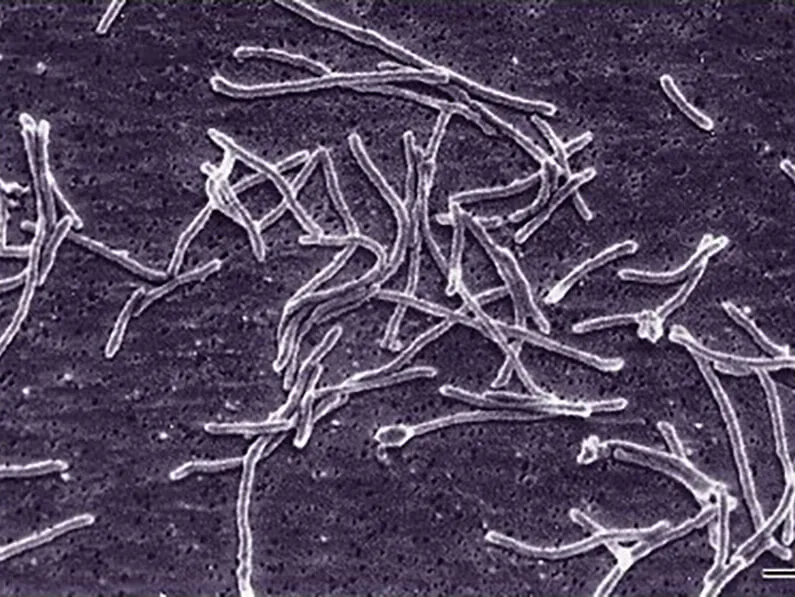
Yellowstone's hot springs are ringed with bands of color, greens and oranges and reds, and those colors are alive: mats of microbes thriving in water hot enough to scald. In the 1960s a microbiologist named Thomas Brock went looking, with no particular application in mind, at what could possibly survive that heat. From Mushroom Spring he and his student Hudson Freeze pulled a rod-shaped bacterium they named Thermus aquaticus, the hot-water bug, and described it in 1969, more than a decade before Mullis took his drive. Because the bacterium lives at near-boiling temperatures, all of its machinery has to keep working there, including its DNA polymerase. That enzyme, nicknamed Taq after the organism, is thermostable: heat does not cook it.
Drop Taq into PCR and the whole problem dissolves. You can heat the reaction to split the strands as many times as you like, and the polymerase simply shrugs it off, ready for the next round and the next and the next, with no one opening the tubes. Pair it with a machine called a thermocycler, which just heats and cools the samples on a programmed schedule, and PCR becomes automatic, cheap, and everywhere. It is how a lab confirms a viral or bacterial infection by fishing for a gene unique to the pathogen. It is how a crime lab matches DNA from a scene to a suspect. It is how we run genetic tests, and how we sequence whole genomes by amplifying overlapping pieces and stitching them back together, which is precisely how scientists first read the genome of the SARS coronavirus.
On the Right Taq
Here is the thing worth sitting with. Not one person in this chain was trying to invent PCR. The sailors who failed to ditch the rotors, the Poles and Turing breaking Enigma, the chemist who misjudged a dose, the microbiologist wading into a hot spring to satisfy his curiosity: none of them could have told you that their work would one day let a doctor catch an infection from a swab, or let us read a virus letter by letter. The enzyme at the center of it all came from a bacterium nobody thought was good for anything, found by a scientist who was simply asking what lives in hot water. That is the quiet argument underneath this whole roundabout story: the return on basic science is real, it is enormous, and it almost never arrives on the schedule, or by the route, that anyone planned. A war ballad got us to a hot spring, and the hot spring taught us to read DNA. Which is to say we landed, against all odds, on exactly the right Taq. Now, about that game of Battleship you still insist you won.
Hosts
Microbiologist, writer and host
Microbiologist and co-host
Sources and Credits
- CreditWritten and performed by Dr. Dustin Edwards and Dr. Faith Cox (opens in a new tab)
- MusicOpportunity Walks by Kevin MacLeod (opens in a new tab)incompetech.com via filmmusic.ioCC BY 4.0
- ImageYellowstone National Park hot springs (opens in a new tab)Brian SchallerFree Art License (FAL)
- ImageThermus aquaticus (opens in a new tab)Diane MontpetitPublic domain
- referenceGerman battleship Bismarck (opens in a new tab)WikipediaLargest German battleships; Operation Rheinubung May 1941; Swordfish from Ark Royal jammed the rudder; scuttled May 27 1941; ~2,200 crew with ~110 survivors; wreck found by Ballard 1989 at ~4,700 m.
- referenceBattle of the Denmark Strait (opens in a new tab)Wikipedia24 May 1941; Bismarck sank HMS Hood within minutes, all but three of ~1,400 crew lost; Swedish cruiser Gotland's sighting reached the British via the naval attache in Stockholm.
- referenceBattle of the Atlantic (opens in a new tab)U.S. Navy, Naval History and Heritage CommandLongest continuous campaign of WWII; 3,500 Allied merchant ships and 175 warships sunk, 72,200 Allied seamen lost; Germany lost 783 U-boats and ~30,000 sailors.
- referenceBattle of the Atlantic (Enigma and U-33) (opens in a new tab)WikipediaCapture of naval Enigma rotors during the sinking of U-33 by HMS Gleaner in February 1940 gave codebreakers the rotor wirings.
- referenceBletchley Park (opens in a new tab)Encyclopaedia BritannicaGC&CS at Bletchley; Turing in Hut 8 (naval Enigma); the Bombe, built with Gordon Welchman from the Polish bomba; ULTRA intelligence.
- referenceBletchley Park (Polish Cipher Bureau handover) (opens in a new tab)WikipediaFive weeks before war, Poland's Cipher Bureau (Marian Rejewski and colleagues) revealed its Enigma-breaking work and supplied an Enigma replica to Britain and France.
- referenceMKUltra (opens in a new tab)WikipediaCIA mind-control program; LSD administered to unwitting subjects; Frank Olson given LSD in 1953 and died after falling from a thirteenth-story window.
- referenceResearch Ethics Aspects of Experimentation with LSD on Human Subjects (opens in a new tab)PMC (J. Bioethical Inquiry review)Albert Hofmann synthesized LSD (1938) and conducted the first, non-voluntary human experiment on himself; effects discussed in print in 1943.
- referenceKary Mullis (opens in a new tab)Encyclopaedia BritannicaAmerican biochemist (1944-2019); invented PCR in 1983 at Cetus; 1993 Nobel Prize in Chemistry; credited LSD with influencing his vision of PCR; climate-change and HIV/AIDS skeptic.
- referenceRIP Kary Mullis, Father of PCR (opens in a new tab)PLOS DNA ScienceEarly PCR used heat-labile E. coli polymerase that had to be replenished each cycle; switching to thermostable Taq from Thermus aquaticus (discovered and described by Thomas D. Brock, 1969, in Yellowstone) solved it. (T. aquaticus is a bacterium, not an archaeon as that post states.)
- referenceThe eccentric scientist behind the gold-standard COVID-19 test (opens in a new tab)National GeographicBrock isolated Thermus aquaticus from Yellowstone's thermal pools in the late 1960s; its DNA polymerase (Taq) was exactly what automated PCR required; Mullis's 1983 Mendocino drive.
Transcript
Listen and subscribe
Related
Antitoxin Togo, Please
What do blue jeans have to do with diphtheria antitoxin and the 1925 Serum Run to Nome? Follow the journey from Levi Strauss and the Gold Rush to the 1925 serum run, where sled dogs raced to deliver life-saving antitoxin. Timeless fashion and infectious diseases might seem like an unlikely pairing, but history has a way of weaving together the unexpected.
Hell on Weils
How does Mardi Gras and Carnival connect to leptospirosis? From New Orleans parades to Brazil’s Carnival, uncover the link between reservoirs, Leptospira bacteria, and the hidden dangers lurking in water and soil.
Rabies Day Out
How does the Google no internet Dinosaur Game connect to Rabies? Haunt over the Raven by Edgar Allen Poe, classic Universal monster movies, psychological thriller and horror by Hitchcock, Kubrick, and Stephen King – including Cujo, and rabies and post exposure vaccine treatment.