Season 1 · Episode 3
Confessions of a Cholera Girl
44:04Updated June 26, 2026
How does Steak and Eggs for breakfast help stave off cholera diarrhea cases during a disaster? Probably not how you think! In this episode, follow along as we connect the Waffle House Index, hurricanes, cholera, epidemiology, and the need for public infrastructure. Vibrio cholerae infects millions of people each year, and the cholera toxin can cause acute diarrheal disease that produces “rice water stool” and kills between 21,000 to 143,000 people worldwide annually.
In this episode
Steak and Eggs
This episode opens, as several of ours do, with one of us confessing to a food crime: a lifelong indifference to breakfast. Not bacon, which is fine, but eggs of any preparation, sausage, the whole genre. The complaint is that breakfast asks too much effort for too little flavor; in the time it takes to build an omelet you could have made something worth eating. Which is how we ended up talking about steak and eggs, and about Waffle House, the diner that, by the company's own telling, has sold well over a hundred million T-bone steaks since it opened in 1955 and may move more of them than anyone. That is a strange enough fact on its own. Stranger still is where it leads. Pull the thread from a T-bone at a Waffle House and it runs through a diner that refuses to close, the storms that diner is used to measure, and out the other side to the oldest lesson in public health and one of the deadliest epidemics of our century. The connective tissue, it turns out, is water.
The Waffle House Index
Waffle House is open all the time. Twenty-four hours, every day, holidays included, and famously through weather that closes everything around it. That stubbornness is not an accident; it is a disaster plan. The chain pre-positions backup generators and fuel, trains staff for storm conditions, keeps stripped-down menus ready for when the power or the water goes, and runs jump teams of employees from unaffected towns who can drive in and keep a location open so local workers can go home to their families. Stay open through enough hurricanes and you become a kind of instrument. In 2004, after Hurricane Charley, an emergency manager named Craig Fugate, who would later run FEMA, noticed that the first thing open after a storm was almost always a Waffle House, and he turned it into a rule of thumb now known as the Waffle House Index. It has three settings: green for the full menu, yellow for a limited one running on a generator or bottled water, and red for closed. Green means the area is basically fine. Red means it is very bad. As Fugate put it, if you get there and the Waffle House is shut, that is exactly where you go to work. A breakfast chain became a gauge of how hard a place got hit.
What Storms Actually Do
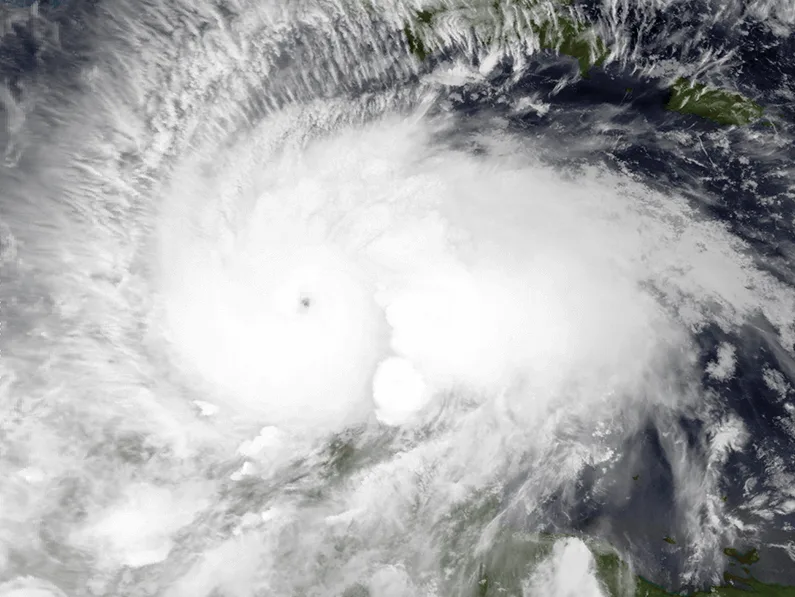
What the index is really tracking is infrastructure: power, fuel, and clean water. And that turns out to be the heart of this whole story, because the danger from a hurricane is not only the wind. The category number, one through five, measures wind speed, but a great deal of the death and damage comes from the storm surge, the wall of seawater that pressure and wind shove ahead of the storm onto the coast. The deadliest natural disaster in American history was a surge: the 1900 hurricane that put fifteen feet of water over low-lying Galveston, Texas, and killed somewhere between six thousand and twelve thousand people. Galveston answered by building a seventeen-foot seawall and physically raising the entire city's grade, which is why some of those old buildings now have a sealed-up former first floor. Storms like that are expected to get worse, not necessarily more frequent but more intense and wetter, as a warming ocean hands them more energy and rising seas give every surge a higher running start.
Here is the turn, though. Hurricanes get blamed for spreading disease, and they do, but not in the way people picture. The danger is not floating corpses seeding plague in the floodwater. The real driver of outbreaks after a disaster is the collapse of ordinary life: people displaced into crowded shelters, knocked away from clean water, working toilets, healthcare, and decent food. Take away safe water and functioning sanitation and you create the perfect conditions for a particular family of illnesses, the fecal-oral diseases.
A Fecal-Oral Disease
A fecal-oral disease is exactly what it sounds like and slightly less gross than it sounds: you get sick by ingesting food or water contaminated with traces of human waste. It is not usually about a single unwashed hand. It is about scale, about a community whose sewage ends up in the same river it drinks from, which is precisely what a flood or a failed water system produces. The fecal-oral disease worth dwelling on, the one that has shaped the entire field of public health, is cholera.
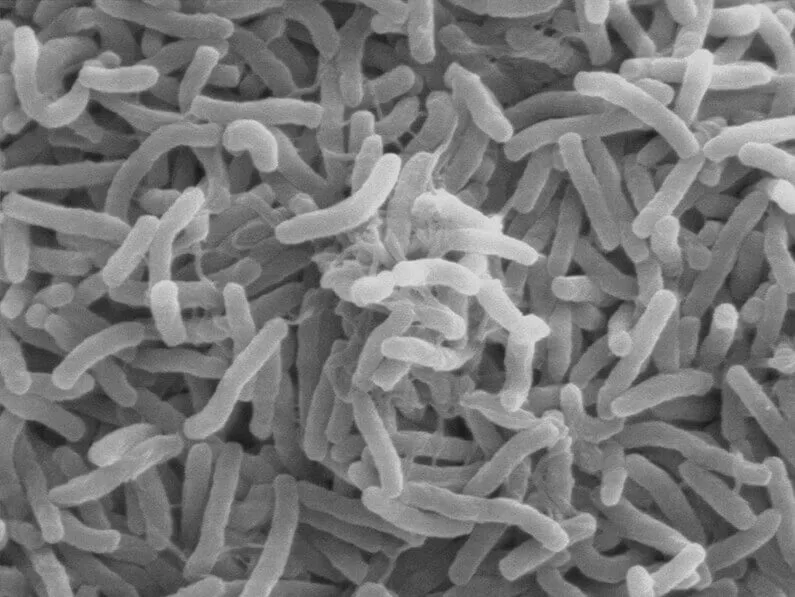
Cholera is an acute diarrheal infection caused by the bacterium Vibrio cholerae, a gram-negative, curved little comma-shaped rod, a facultative anaerobe that does fine with or without oxygen. It is violently efficient: somewhere between twelve hours and five days after you swallow enough of it, it can produce profuse watery diarrhea, vomiting, cramping, and, untreated, death. Worldwide there are still on the order of one to four million cases a year and tens of thousands of deaths, rare in the United States but endemic in places without reliable clean water. The organism was first seen under a microscope in 1854 by an Italian anatomist named Filippo Pacini, whose work was published locally and promptly ignored by the wider world; international credit went instead to the German bacteriologist Robert Koch, who isolated it during an outbreak in Egypt in the 1880s. But the most important figure in the cholera story never saw the bacterium at all.
The Broad Street Pump
In the summer of 1854, the same year Pacini was peering at the comma-shaped bacterium, a vicious cholera outbreak tore through the Soho district of London, around Broad Street and Golden Square, and killed more than six hundred people in a matter of weeks. The medical establishment of the day blamed miasma, bad air, a noxious vapor thought to rise from filth and carry disease. A local physician named John Snow did not buy it. He suspected the route was water, and he did something then unusual: he gathered data. He mapped the deaths house by house and watched them cluster, tightly, around a single public water pump on Broad Street. He persuaded the skeptical local authorities to remove the pump's handle, and the outbreak, already fading, broke. In a separate and even more careful study, he compared London households served by two water companies, one drawing from a sewage-tainted stretch of the Thames and one from cleaner water upstream, and showed the cholera deaths tracked the dirty supply. He had identified how the disease spread decades before anyone could name the germ that caused it. His peers largely rejected him at the time. He is now considered a founder of epidemiology, and the Broad Street pump is its origin myth: the moment someone proved that the thing killing people was not the air but the water.
What the Toxin Does
The reason cholera kills so fast is a single elegant, awful molecule. Once Vibrio cholerae reaches the small intestine, it secretes cholera toxin, and the gene for that toxin is not even really the bacterium's own; it is carried by a virus, a bacteriophage, that infected the microbe. The toxin is built in two parts: a ring of subunits that latches onto the lining of your gut, and an active piece that slips inside the cell and jams one specific switch. It chemically locks a signaling protein into the on position, which leaves an enzyme called adenylate cyclase stuck running, which floods the cell with a messenger molecule called cAMP, which throws open a channel in the cell membrane. Through that open gate the cell dumps chloride, sodium, and water out into the gut, and stops absorbing them back. The result is the hallmark of severe cholera: torrents of pale rice-water diarrhea, as much as a liter an hour, until the body is wrung dry. People do not die of cholera so much as of dehydration, sometimes within hours.
And here is the quietly beautiful part. The toxin does not kill the cells; it only hijacks one switch and leaves the rest of the intestinal machinery intact, including a separate doorway that pulls sodium and water back into the body when there is sugar around to power it. That loophole is the entire basis of oral rehydration therapy, a carefully balanced mix of salt, sugar, and clean water that lets the gut reabsorb fluid as fast as the toxin pours it out. It costs pennies, it can be made at home, and it has saved tens of millions of lives. The cure for the deadliest part of cholera is, essentially, the right glass of water. Which makes it all the more tragic when the water is the problem.
Haiti
In January 2010, a magnitude-7 earthquake leveled much of Port-au-Prince and killed well over a hundred thousand people. Ten months later, cholera appeared in Haiti for the first time in the country's recorded history. Because it followed the quake, people understandably blamed the disaster. They were wrong, and the truth is harder to sit with. The strain was Vibrio cholerae O1, and genetic and epidemiological fingerprinting traced it to South Asia, specifically to a contingent of United Nations peacekeepers from Nepal, where cholera is endemic, whose base sanitation leaked into a tributary of the Artibonite River, the river hundreds of thousands of Haitians drink from, wash in, and cook with. The disease that John Snow diagnosed in a Soho water pump had been introduced, a century and a half later, the same exact way: human waste in the drinking water. The epidemic became the deadliest in the world in recent memory, with an estimated eight hundred thousand or more cases and roughly ten thousand deaths before it was finally declared over in 2019. The United Nations did not formally acknowledge its role until 2016. And that same October, Hurricane Matthew slammed into Haiti and the cases surged again, worst in the storm-battered south, the Waffle House Index logic playing out on an island with no Waffle Houses: the storm did not import the germ, it just smashed the water and sanitation that had been holding it back.
Confessions of a Cholera Girl
So that is the road from a T-bone steak to a cholera ward, and the whole way it is paved with water. A diner becomes a disaster gauge because staying open means the power and the clean water are back. A storm becomes an epidemic only when it severs people from safe water and working toilets. And the disease at the end of the line is the one that taught us, in a Soho street in 1854, that the difference between a frightening illness and a mass grave is sanitation, a lesson we proved again, expensively, in Haiti. One of us confessed at the top of the episode to a weakness for cholera, the bug, as a subject; consider this the confession of a cholera girl. The takeaway is less morbid than it sounds. We already know how to stop this. We worked it out before we could even see the culprit. The pump handle still comes off; we just have to be willing to walk over and pull it.
Hosts
Microbiologist, writer and host
Microbiologist and co-host
Sources and Credits
- CreditWritten and performed by Dr. Dustin Edwards and Dr. Faith Cox (opens in a new tab)
- MusicBossa Antigua by Kevin MacLeod (opens in a new tab)incompetech.com via filmmusic.ioCC BY 4.0
- ImageHurricane Matthew (2016) (opens in a new tab)NOAAPublic domain
- ImageVibrio cholerae (SEM) (opens in a new tab)Kirn et al.Public domain
- referenceWaffle House Index (opens in a new tab)WikipediaCoined by Craig Fugate in August 2004 after Hurricane Charley; informal FEMA storm-severity gauge with green (full menu), yellow (limited), and red (closed) levels.
- referenceWhat Is the Waffle House Index? The True Story From the Man Who Created It (opens in a new tab)NewsweekFugate's account of the index's origin after Hurricane Charley (2004); 'if you get there and the Waffle House is closed, that's really bad.'
- reference1900 Galveston hurricane (opens in a new tab)WikipediaDeadliest natural disaster in US history; 6,000-12,000 deaths (8,000 most cited); storm surge; afterward a 17-ft seawall and a raising of the island's grade.
- reference1854 Broad Street cholera outbreak (opens in a new tab)Wikipedia616 deaths in Soho; John Snow mapped the deaths to the Broad Street pump, had the handle removed, and argued waterborne (not miasma) transmission, founding epidemiology.
- referenceJohn Snow, Cholera, the Broad Street Pump; Waterborne Diseases Then and Now (opens in a new tab)PMC (Baylor Univ. Medical Center Proceedings)Snow's pump-handle removal and his two-water-company comparison; V. cholerae grown by Pacini in 1854 (ignored) and credited internationally to Robert Koch in 1883.
- referenceHow John Snow stopped cholera: the Broad Street water pump (opens in a new tab)yourgenome (Wellcome Connecting Science)Cholera affects roughly 1.3-4 million people per year; Koch later identified V. cholerae, confirming Snow's waterborne theory.
- referenceCholera toxin (opens in a new tab)WikipediaAB5 toxin; raises cAMP, activates PKA, phosphorylates and opens CFTR, driving secretion of Cl-, HCO3-, Na+, and water and profuse watery diarrhea.
- referenceThe Manipulation of Cell Signalling and Host Cell Biology by Cholera Toxin (opens in a new tab)PMCB pentamer binds GM1; CTA1 ADP-ribosylates Gs-alpha, locking adenylate cyclase on; the toxin is encoded by the CTXphi bacteriophage and does not kill the cell.
- reference2010s Haiti cholera outbreak (opens in a new tab)WikipediaFirst cholera in Haiti's recorded history; source traced to a Nepalese UN (MINUSTAH) peacekeeper base contaminating a tributary of the Artibonite River; ~800,000 infected, >9,000 dead.
- referenceCholera in Haiti, Again (opens in a new tab)New England Journal of MedicineFirst appeared in 2010 after the earthquake, traced to UN forces from Nepal; ~820,000 cases and ~10,000 deaths; apparently eliminated in 2019, resurged 2022.
- referenceIncrease in Reported Cholera Cases in Haiti Following Hurricane Matthew (opens in a new tab)PMC (Am. J. Trop. Med. Hyg.)Category 4 Hurricane Matthew struck Haiti Oct 4 2016, driving a regional surge in cholera cases (worst in Sud and Grand'Anse); strain V. cholerae O1 Ogawa El Tor.
- referenceCholera in Haiti (2010-2019 epidemiology) (opens in a new tab)ScienceDirect (Med. Mal. Infect.)Officially 9,789 deaths; UN's 2016 acknowledgment of responsibility; last confirmed case and death in February 2019 in the Artibonite plain.
Transcript
Listen and subscribe
Related
Antitoxin Togo, Please
What do blue jeans have to do with diphtheria antitoxin and the 1925 Serum Run to Nome? Follow the journey from Levi Strauss and the Gold Rush to the 1925 serum run, where sled dogs raced to deliver life-saving antitoxin. Timeless fashion and infectious diseases might seem like an unlikely pairing, but history has a way of weaving together the unexpected.
Hell on Weils
How does Mardi Gras and Carnival connect to leptospirosis? From New Orleans parades to Brazil’s Carnival, uncover the link between reservoirs, Leptospira bacteria, and the hidden dangers lurking in water and soil.
Rabies Day Out
How does the Google no internet Dinosaur Game connect to Rabies? Haunt over the Raven by Edgar Allen Poe, classic Universal monster movies, psychological thriller and horror by Hitchcock, Kubrick, and Stephen King – including Cujo, and rabies and post exposure vaccine treatment.